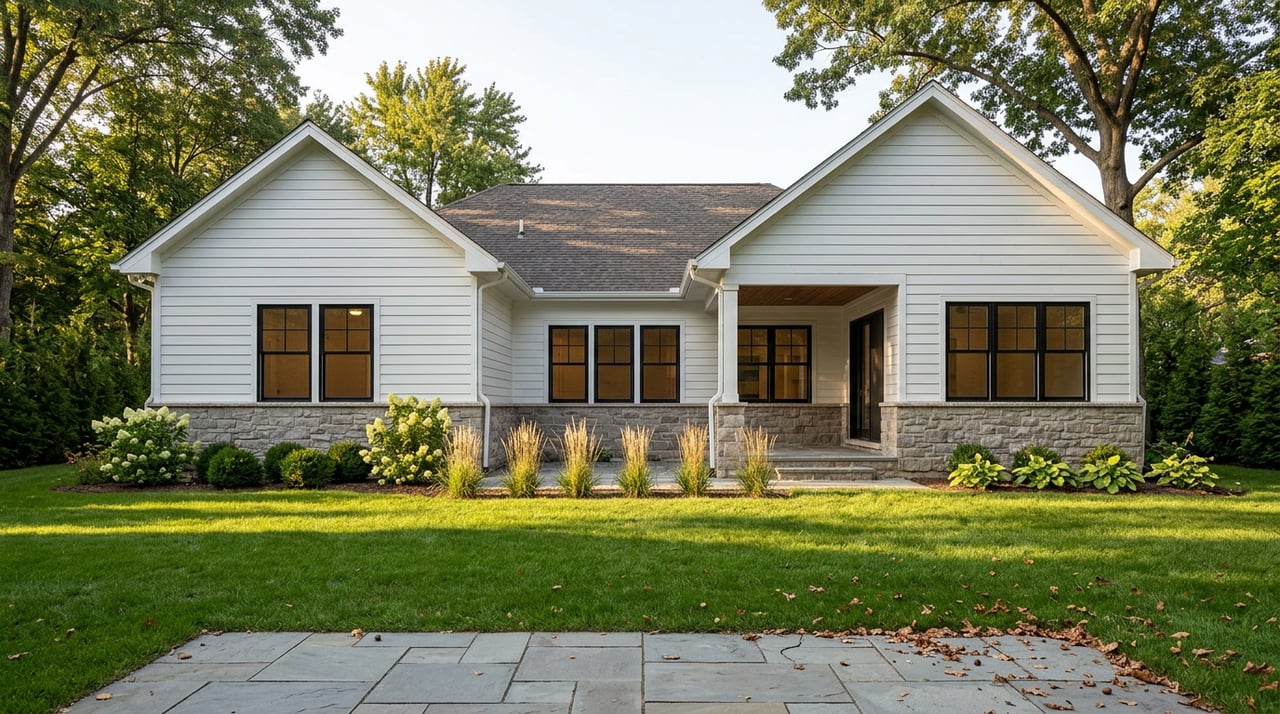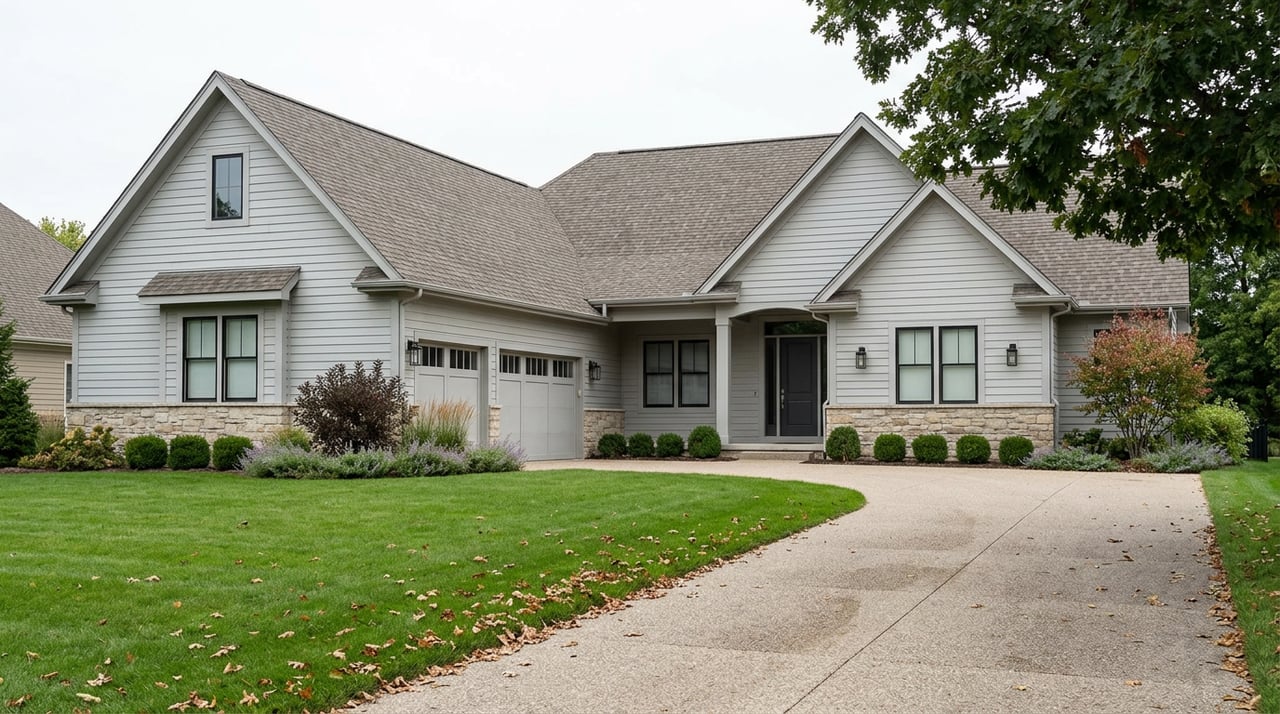
Picture two homes a few streets apart, both listed at a similar price, both carrying the same "Grand Blanc" address on the listing sheet. One sits inside the City of Grand Blanc, where a homeowner pays a property tax bill built on roughly 30 to 35 mills. The other sits just across an invisible line in Grand Blanc Charter Township, a separate local government entirely, with its own fire department and its own parks budget. Neither listing mentions this. Both just say "Grand Blanc."
That's because Grand Blanc isn't one government wearing one name. It's two.
One Name, Two City Halls
The City of Grand Blanc covers just over 3.6 square miles with a population under 8,000. Grand Blanc Charter Township wraps around it on every side, covering more than 32 square miles and, as of the 2020 census, home to nearly 40,000 people. The city sits inside the township like an island, but the two have run as separate municipal governments since the city incorporated in 1930.
Most people who live here just say "Grand Blanc" and mean the whole area, city and township together. That's understandable. The schools carry the same name, the downtown serves both, and the zip codes overlap. But city and township are legally distinct, and that distinction shows up on paper the moment a tax bill or a fire call is involved.
It's also not a recent split invented by a subdivision plat. In May 2006, voters in both the city and the township were asked whether to consolidate into a single government. Both sides said no. The arrangement has only grown more separate since: the city started its own fire department in 2019, and the two governments split their previously joint parks and recreation department in 2020. A later analysis from the Citizens Research Council of Michigan, a statewide nonpartisan research organization, modeled what a full merger would do to tax rates and found it would cut roughly 6 mills off the city's rate while adding 1.5 to 2 mills for township residents, a reminder of just how differently the two sides of the line are currently taxed.
That history matters for anyone comparing homes here today. This isn't a temporary quirk that's about to resolve into one tax roll. It's the settled structure of how Grand Blanc runs, and it's the structure a buyer is stepping into no matter which side of the line their new address falls on.
What the Split Actually Costs
Here's where it gets concrete. A local market analysis published in June 2026 estimated that a home inside the City of Grand Blanc, assessed near the spring 2026 median list price of roughly $310,000, would carry a total homestead millage in the 30 to 35 mill range, working out to an effective rate near 0.58 percent. After the standard Principal Residence Exemption, that pencils out to an annual bill somewhere between $5,000 and $6,500.
Move across the line into the township and the number shifts, driven less by the township government itself and more by which school district a given parcel is assigned to. That's the part a portal listing will never surface: two homes a few streets apart, both carrying a "Grand Blanc" address, can land in different school-tax territory entirely.
| City of Grand Blanc | Grand Blanc Township | |
|---|---|---|
| Land area | ~3.6 sq mi | 32+ sq mi |
| Population (2020 census, approx.) | Under 8,000 | 39,846 |
| Fire department | Own dept. since 2019 | Own dept. since 2019 |
| Parks & recreation | Split from joint dept. in 2020 | Split from joint dept. in 2020 |
| Typical homestead millage | ~30 to 35 mills | Varies by school assignment |
None of this means one side is a better buy than the other. It means the number a buyer sees attached to "Grand Blanc" on a search result is an average sitting on top of two different tax jurisdictions, and averages hide exactly the kind of variation that shows up on a closing statement.
The School District Twist Nobody Mentions on the Listing
Here's the detail that catches people off guard the most. The overwhelming majority of Grand Blanc Township is zoned to Grand Blanc Community Schools, the same district that serves the city. But small sections of the township aren't. Pockets at the edges feed into Goodrich Area Schools or Lake Fenton Community Schools instead, districts most buyers associate with entirely different towns.
A family assuming that a Grand Blanc mailing address guarantees Grand Blanc Community Schools enrollment could be wrong, and the only way to know for certain is to check the specific parcel against the district's own boundary maps rather than trusting the city name on the listing sheet. Since school operating millage is one of the biggest line items in any Michigan tax bill, this isn't a minor footnote. It's often the actual reason two nearby homes carry different totals.
What the Median Price Is Actually Blending
Zoom out to the market level and the same blending problem shows up in the headline number itself. As of spring 2026, MLS-based trackers put the Grand Blanc area's median list price at roughly $308,000 to $313,000, with homes spending an average of about 61 days on the market. That's a meaningfully slower pace than just a couple of years earlier, when homes here were routinely going under contract within two weeks.
That single median is doing the same job as the "Grand Blanc" name on a listing: folding city and township sales into one number, and folding every school-tax scenario into one average. A buyer using that figure to compare against Fenton, Davison, or Linden is comparing a blended number against other towns' own blended numbers, without ever seeing the internal spread that a two-government, multi-school-district area like this one actually contains.
Before treating any "Grand Blanc" price point as apples to apples with another town, it's worth checking a few things address by address:
- Whether the parcel sits inside the City of Grand Blanc or Grand Blanc Township, since that determines which fire department, which parks system, and which base millage apply
- Which school district actually serves that specific address, since Grand Blanc Township includes small areas zoned to Goodrich or Lake Fenton schools
- The property's current tax bill, not just an estimated rate, since Michigan's taxable value rules mean a long-owned home can carry a lower bill than the same house would after a sale resets its taxable value
The Michigan Department of Treasury's property tax estimator lets a buyer plug in a specific city, township, or village and get a rate-based estimate rather than relying on an areawide average. It's a five-minute check that turns a blended median back into a real number for one specific address.
FAQ
Does living in Grand Blanc Township mean my kids attend Grand Blanc Community Schools? Usually, yes, since the district serves most of the township. But a few areas at the township's edges are zoned into Goodrich Area Schools or Lake Fenton Community Schools instead, so it's worth confirming the exact boundary for any specific address rather than assuming based on the mailing address.
Why does Grand Blanc have two fire departments? The city and township ran a joint department for decades, but the city established its own fire department in 2019. It followed the same pattern set in 2006, when residents on both sides voted against fully consolidating the two governments.
How do I find out whether a house is in the city or the township? The county assessor's parcel records will show the taxing jurisdiction directly, and the Michigan property tax estimator lets you check the specific municipality tied to an address before you rely on any general area estimate.
If you're comparing homes across Grand Blanc, Fenton, Davison, or anywhere else in Genesee County and want the real numbers behind a specific address rather than a blended average, Jackie Stratton can walk you through exactly which jurisdiction, school district, and tax picture applies. Start with a Get Your Instant Home Valuation and get address-specific answers instead of area-wide estimates.