Page 50 of the Swartz Creek Downtown Development Authority's October 8, 2026 meeting packet carries a builder's cost schedule for three downtown townhomes. Land is listed at $60,000. The estimated total is $1,096,075.
So land is about 5.5 percent of the cost of building one triplex in the city, and roughly $365,000 per unit goes into lumber, labor, drywall, plumbing, fees and the sale itself. That gap between cheap land and expensive building explains a lot about new construction inside Swartz Creek city limits. It explains why vacant lots in one subdivision have barely changed price in nine years. It explains why a townhome project approved in 2019 is still twelve units short. And it explains why the city is now weighing a deal to cover the difference between what those units cost and what they sell for.
The lots that cost almost nothing and still don't sell
Heritage Village sits northeast of Elms and West Bristol roads, along streets like Heritage Boulevard, Canterbury Trail and St. Charles Pass. Woodside Builders began developing it, and the recession stopped the work. In 2011, MLive reported that homes stood on 69 percent of Heritage sites, with 35 lots still vacant.
Some of those lots ended up with the city. A July 2017 council packet put a proposed sale of two city-owned Heritage lots to J.W. Morgan Construction before the council at $11,000 each, with conditions requiring construction. Nearly a decade later, the price hasn't moved. In the May 11, 2026 council packet, the city manager's report described the two lots the city had since picked up through tax reversion:
"Listings in Heritage for vacant units are $10,000-$12,000, and none of them are moving. I propose a price of $10,000 for each lot."
By the October 12, 2026 packet, the same listings were "moving slowly." City staff are authorized to sell the city's lots only to J.W. Morgan, under a council action taken together with the Heritage Home Owners Association.
A lot is worth whatever is left over after you subtract the cost of building from what the finished house will sell for. When building costs rise as fast as home values, or faster, that leftover stays small no matter how good the location is. A $10,000 lot isn't a bargain waiting to be found. It's what the land is worth once someone has done the construction math.
Where the $1.1 million goes
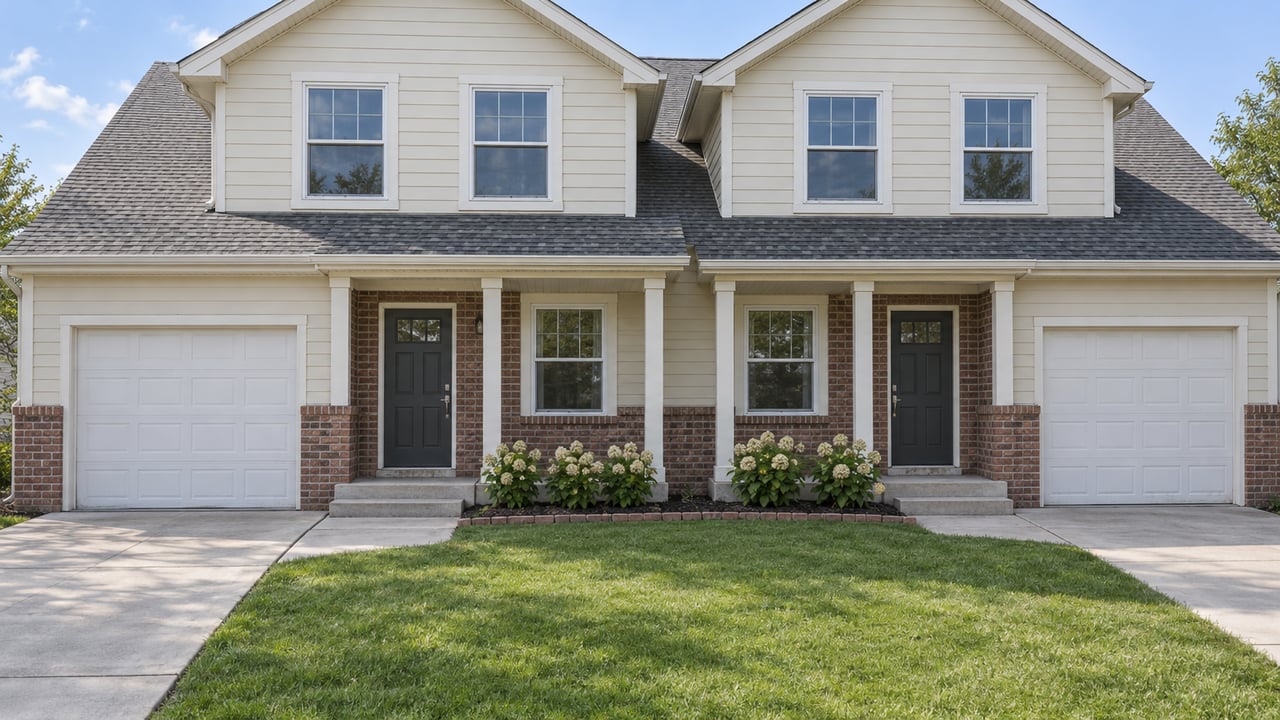
Brewer Townhomes shows that math more clearly than anything else in the public record. In 2019, the Planning Commission reviewed a proposal from RBF Construction for 15 condominium townhomes on two parcels in the Central Business District. Swartz Creek View reported at the time that the plan called for two-story, 1,700-square-foot units with two-car garages, expected to sell for $220,000 to $240,000 each.
By September 2024, the first triplex was finished and all three units had sold. The city manager's report said the developer was looking for builder partners and considering a redesign with a first-floor primary bedroom. It also noted that site development costs were rising. Twelve units remain.
Here is RBF Holdings' estimated cost schedule for one triplex from the October 2026 DDA packet, grouped by category:
| Category | Line items include | Cost |
|---|---|---|
| Land | Parcel | $60,000 |
| Permits, fees, site setup | Building permits, $9,800 sewer and water taps, erosion bond, dumpsters | $32,500 |
| Site work and foundation | $55,000 foundation, excavation, approaches, landscaping | $111,700 |
| Exterior shell | $100,000 framing materials, $50,000 framing labor, windows, siding, roofing, decks | $315,500 |
| Interior | $54,000 plumbing, $52,275 drywall, $44,500 electrical, $40,100 cabinetry | $408,875 |
| Builder and sale costs | Supervision, construction management, 6% commission, title | $167,500 |
| Total | $1,096,075 |
The interior alone costs more than six times the land. The schedule also includes a $62,000 line for a 6 percent real estate commission. That line is our only clue to expected sale prices. If the commission is 6 percent of total sales, the three units would bring in a bit over $1 million combined, or around $344,000 each. That's our own back-calculation, not a price the city or the developer has published. It does put expected revenue below the $1,096,075 estimated cost, which matches the reason the project is asking for help.
For scale, FRED put the median listing price across Genesee County at $217,375 for September 2026. That figure is a county-wide listing price, not a Swartz Creek sale price. Even so, it's well below the roughly $365,000 per unit the builder estimates for one of these townhomes.
How the city plans to cover the gap
Through City Council, the city adopted a tax increment financing program under the DDA's development and TIF plan dated October 13, 2025. The plan's stated goal is to close the "gap" that keeps a project from happening when the numbers don't work for the owner. The draft Brewer agreement defines that gap exactly. For each unit, the developer adds up its eligible spending, subtracts what the unit sold for in an arm's-length sale, and submits the difference, called the "Gap Amount," for review.
As the October 1, 2026 memo to the DDA board describes the process, the developer would:
- Build the remaining twelve units according to the site plan
- Sell them in arm's-length transactions
- Track every expense, from acquisition, materials and labor to brokerage and management fees
- Have the reimbursable amount set by auditing those costs against each sale
- Be repaid from 90 percent of the tax increment revenue, with interest, for up to 18 years or until the balance is paid
The draft sets interest on approved gap amounts at 6 percent a year and caps the total gap amount at $630,000, with interest paid on top of that. Spread over twelve units, the cap works out to an average gap of $52,500 per unit before interest. The repayment comes from new tax revenue the finished project generates, captured from city, county and other levies under Michigan's DDA law. The developer pays for construction up front and gets money back only after units are built, certified for occupancy and sold.
The DDA's TIF Review Committee met on June 9 and June 24 and recommended moving forward. In September, the DDA board asked for a schedule of expenses and a third-party dispute resolution clause to be added, plus a committee to audit sales and construction costs. The October 12 council packet says the DDA recommended the agreement and staff planned to bring it to City Council on October 26. Filed documents give the developer until early 2027 to continue.
What a buyer inherits in a subdivision that stalled
Springbrook East sits northeast of Miller and Morrish roads, on streets including Maya Lane, Maplecrest Circle, Lindsey Drive, Russell Drive and Alex Marin Drive. It was also a Woodside Builders project. Development began in 2007, and the recession stopped it. In 2010, MLive described residents of Springbrook East and Heritage facing unfinished paving and special assessments. It also reported that the streets were not yet city roads and that the city manager opposed spending city money on streets the city didn't own.
When the city sold 12 Springbrook East units back to Woodside in 2014, the deal held $3,500 per unit in escrow for unfinished Phase One infrastructure, including capping the streets. In September 2024, the city said the streets were public and planned to formally accept them once a punch list was finished. Future phases had been sold, and J.W. Morgan and a partner appeared to control them.
As of October 2026, that handoff still hasn't happened. The current phase is substantially complete, but the easement dedication for streets and utilities missed a state deadline. The city is still waiting on proper survey documents and confirmation of ownership, and the homeowners association is working to resolve it. For anyone buying there, whether the street in front of the house has been formally accepted by the city is a question for the title work and the HOA documents. The council records reviewed don't say who handles maintenance while dedication is pending.
What this means when you compare Swartz Creek
For a buyer, the conclusion is simple. In-town new construction in Swartz Creek arrives slowly and in small batches, because each new unit costs more to build than land prices suggest and more than the existing-home market typically pays. The city's own records show it: lots priced around $10,000 since 2017, a 15-unit project that has finished three units since 2019, and a proposed public reimbursement, with the gap amount capped at $630,000 plus interest, to finish the rest.
That also means the homes already standing in Heritage, Springbrook East and the city's older streets are where most of the choice is. They were built when the math worked differently. That's why buyers here should compare the price of an existing home against what it would cost to build the same home today, not just against the county median.
FAQ
Has the Brewer Townhomes incentive been approved? Not as of October 12, 2026. The DDA's resolution recommends approval, and staff planned to take the agreement to City Council on October 26.
Does the gap financing set the price of the townhomes? The draft agreement doesn't set sale prices. It calculates reimbursement after each arm's-length sale, using the developer's audited costs minus the price the unit sold for.
Can anyone buy the city-owned lots in Heritage? Under the current council action, coordinated with the Heritage Home Owners Association, staff may sell those lots only to J.W. Morgan. The city manager said any other formal offer would go to council.
If you own in Heritage, Springbrook East or anywhere else in Swartz Creek, the gap between building costs and sale prices is part of what your home is worth. Jackie Stratton can walk you through how recent nearby sales compare with what it would cost to build your home today. Get Your Instant Home Valuation to see where your number lands.
This article is general information, not legal, tax or financial advice. Consult a qualified professional about your situation.